Best Mirrorless Full-Frame Cameras For 2019
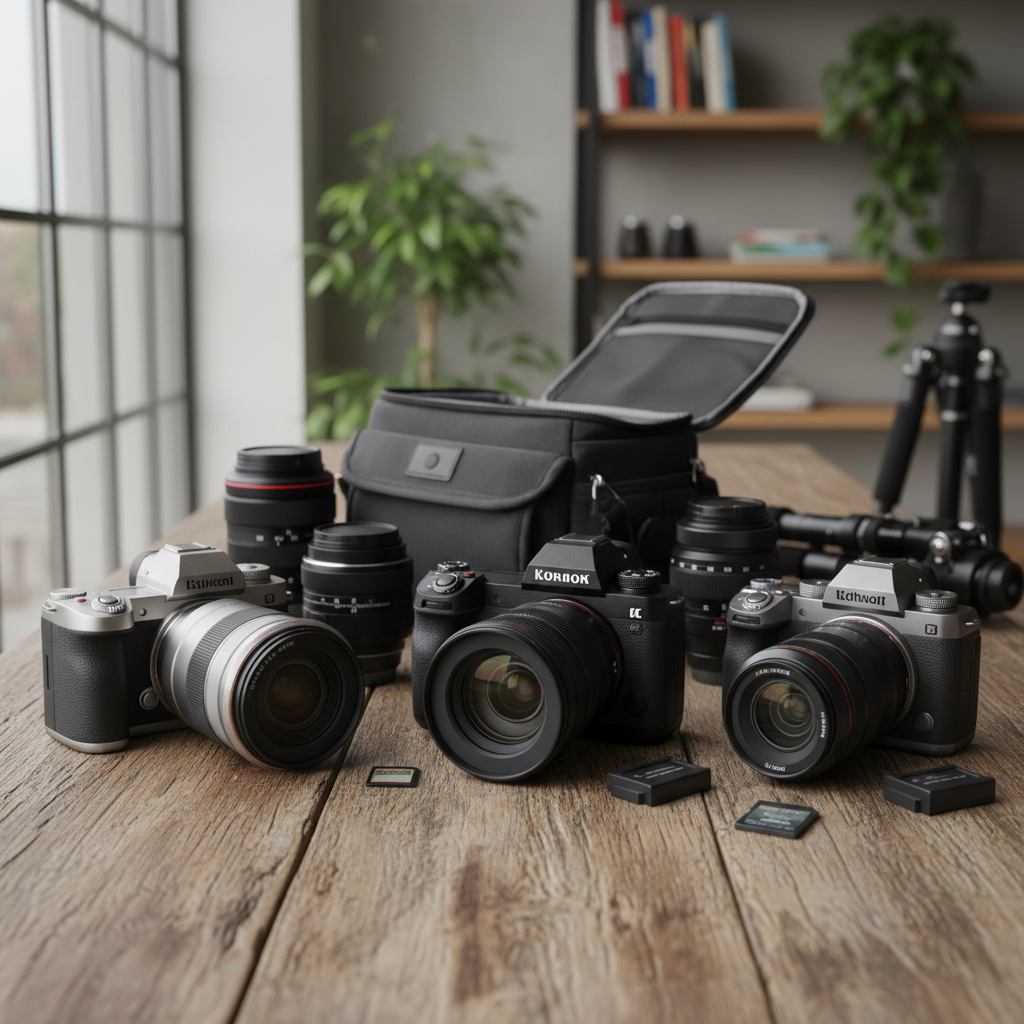
Buying a full-frame mirrorless camera in 2019 is no longer simply a question of which Sony to choose. Nikon and Canon now have credible systems, Panasonic has entered the field with substantial professional bodies, and Sigma is challenging expectations about how small a full-frame camera can be.
That competition is welcome, but it makes buying harder. A high megapixel count does not guarantee the best camera for weddings, and a compact body does not necessarily produce a compact, or inexpensive, kit. Autofocus, lenses, recording limits, memory cards, and handling can matter more than headline specifications.
This guide reflects the market at the end of 2019; tools, firmware, and interfaces may have changed since then.
The recommendations below cover the strongest choices for different photographers, including cameras introduced before 2019 that remain excellent purchases this year.
The quick shortlist
| Camera | Best fit | Main trade-off | | --- | --- | --- | | Sony A7 III | Best all-rounder for most photographers | Menus and handling take practice | | Sony A7R IV | Maximum-resolution photography | Large files and a substantial price | | Nikon Z6 | Nikon users seeking a balanced hybrid | One memory-card slot | | Nikon Z7 | Detailed landscapes and studio work | Less versatile than sports-focused bodies | | Canon EOS R | Canon lens owners and portrait photographers | Cropped 4K and no in-body stabilization | | Panasonic Lumix S1R | High-resolution work with excellent handling | A large, heavy system | | Sigma fp | Compact, modular video production | Significant stills and rigging compromises |
There is no universal winner. The Sony A7 III is the safest general recommendation, but existing lenses and your actual assignments can easily point elsewhere.
Sony A7 III: the best all-rounder
The A7 III remains a compelling purchase in 2019 because it balances the specifications most people actually need. Its 24.2-megapixel backside-illuminated sensor delivers detailed files without the storage demands of higher-resolution alternatives. You also get 693 phase-detection autofocus points, up to 10fps shooting, in-body stabilization, and internal 4K recording.
Why it stands out
Autofocus coverage and eye detection make it particularly useful for portraits, events, and everyday photography. Battery endurance is another strength relative to many contemporary mirrorless rivals. Two SD-card slots support an important professional workflow: recording redundant copies of still photographs.
Sony's established lens range is equally significant. Alongside Sony lenses, there are increasingly attractive autofocus options from third-party manufacturers. Compare complete kits rather than body prices and that selection becomes a real advantage.
What to watch
The menus require patience, touchscreen functionality is limited, and some photographers find the grip cramped with larger lenses. Only one card slot supports UHS-II speeds, so dual-card operation is not as straightforward as the specification sheet might suggest.
Buy it if: you want one camera for portraits, travel, paid events, and occasional video without specializing too heavily.
Sony A7R IV: the resolution leader
Introduced in 2019, the A7R IV raises the resolution ceiling with a 61-megapixel full-frame sensor. It pairs that detail with up to 10fps shooting, phase-detection autofocus, in-body stabilization, and a high-resolution electronic viewfinder.
For commercial photography, expansive landscapes, and substantial cropping, it is one of the year's most capable options.
Resolution brings responsibilities
More pixels help when you need large prints or cannot frame tightly in the field. They also expose missed focus, camera movement, and weak lenses when you inspect images closely. Larger raw files increase the burden on memory cards, backup drives, and editing hardware.
Its pixel-shift mode can produce exceptionally detailed composites, but it requires desktop processing and carefully controlled conditions. Movement in foliage, water, or people can cause problems; it is not a general-purpose substitute for a single exposure.
The older 42.4-megapixel A7R III remains worth considering if its price leaves more room for lenses.
Buy it if: you can identify a practical reason for very high resolution, rather than simply wanting the largest number on the box.
Nikon Z6 and Z7: choose balance or detail
Nikon's first full-frame mirrorless bodies arrived in 2018, but they remain central to the 2019 buying decision. Both offer comfortable grips, good electronic viewfinders, in-body stabilization, and access to Nikon's developing Z-mount lens range.
Nikon Z6: the more balanced choice
The Z6 combines a 24.5-megapixel sensor with 273 phase-detection autofocus points, internal 4K recording, and burst speeds reaching 12fps under particular settings. Maximum burst mode involves compromises, so test the shooting experience rather than judging it by frame rate alone.
For general photography and hybrid stills/video work, it is often the more sensible Nikon purchase. External 10-bit N-Log recording also gives video users an option beyond the internal recording format, provided they budget for a compatible recorder.
Nikon Z7: for resolution-first photography
The Z7's 45.7-megapixel sensor and 493-point phase-detection AF system make it especially attractive for landscapes, architecture, and studio subjects. Its handling feels familiar to many Nikon DSLR users without simply copying a DSLR body.
Both cameras use a single XQD-format card slot. Firmware available by late 2019 adds support for selected CFexpress Type B cards, but buyers should confirm compatibility before purchasing media. Neither body provides simultaneous in-camera card backup.
The FTZ adapter is useful for existing F-mount collections, but autofocus compatibility depends on the lens. Older screw-drive autofocus lenses do not gain autofocus through the adapter.
Buy a Z6 if: versatility matters most. Buy a Z7 if: extra detail justifies the cost and larger files.
Canon EOS R: strongest for existing Canon users
Canon introduced the EOS R in 2018, not 2019. Its 30.3-megapixel sensor, Dual Pixel CMOS AF, fully articulating screen, and RF mount nevertheless make it a relevant choice throughout this year.
Portrait photographers will appreciate its autofocus coverage, while the EF-EOS R adapter offers a straightforward route for using compatible EF lenses. For someone with a substantial Canon lens collection, that continuity can outweigh advantages elsewhere.
Understand the compromises
The EOS R lacks in-body image stabilization and has one SD-card slot. Its advertised maximum burst speed does not describe every continuous-autofocus situation, so action photographers should examine tracking performance and shooting-mode restrictions carefully.
Its substantial 4K crop is a bigger concern for video. Wide-angle framing becomes harder, particularly indoors or when filming yourself. The touch-sensitive M-Fn Bar is also divisive: try it before assuming it improves your workflow.
The less expensive EOS RP, introduced in 2019, deserves attention for travel and accessible full-frame stills. However, its smaller battery and more restrictive video capabilities make it a different proposition, not merely a cheaper EOS R.
Buy it if: you value Canon handling, portrait work, and continuity with EF lenses more than class-leading video or action performance.
Panasonic Lumix S1R: excellent detail, substantial build
The S1R combines a 47.3-megapixel sensor with in-body stabilization, a remarkably detailed 5.76-million-dot electronic viewfinder, and a robust, weather-resistant body. Its generous controls and status display suit photographers who prefer a substantial camera to a minimalist one.
A multi-shot high-resolution mode can produce approximately 187-megapixel images. Like other sensor-shift composite modes, it is most useful with a stable setup and suitable subjects, not as a guarantee of extra detail in every scene.
The handling-versus-weight decision
This is not the system to buy purely to reduce your bag's weight. The body is large, and professional L-mount lenses can be substantial too.
Panasonic's contrast-detection autofocus uses Depth From Defocus technology. It can work very well for many still subjects, but continuous tracking and visible focus pulsing in video deserve testing against phase-detection competitors.
The lower-resolution, 24.2-megapixel S1 is generally the more relevant Panasonic alternative for hybrid users. Some of its advanced video capabilities depend on a paid upgrade, so check the exact package being offered.
Buy the S1R if: resolution, viewfinder quality, and physical handling matter more than portability or demanding action tracking.
Sigma fp: a specialist, not a conventional all-rounder
The Sigma fp's 24.6-megapixel full-frame sensor fits into an exceptionally compact L-mount body. Its modular design and CinemaDNG recording options make it particularly interesting for filmmakers building a small production camera around specific accessories.
However, calling it the best small full-frame camera without qualification would be misleading.
Budget for the complete setup
There is no built-in viewfinder or mechanical shutter. Its electronic-only shutter can produce distortion with moving subjects and banding under some artificial lighting. Those limitations matter for event photographers and anyone shooting unpredictable movement.
There is also no in-body sensor-shift stabilization. Depending on your work, you may want a grip, external monitor, audio accessories, support equipment, and external storage. Available CinemaDNG bit depths and frame rates depend on recording settings and media; do not assume every advertised option works internally.
Buy it if: you specifically want a compact, modular filmmaking platform and understand its recording workflow. For family photography or general travel, conventional alternatives are easier recommendations.
Where Leica and sports cameras fit
The original 24-megapixel Leica SL remains attractive for its build, straightforward controls, and excellent viewfinder. But by late 2019, the new 47.3-megapixel SL2 deserves consideration instead, with in-body stabilization and a more modern feature set. Both belong in a premium buying conversation rather than a value shortlist.
For professional sports, Sony's A9 and late-2019 A9 II are more relevant than resolution-first bodies. Their stacked-sensor design supports fast electronic-shutter shooting with reduced rolling-shutter distortion. They remain specialist investments, not necessary upgrades for occasional action.
How to choose your camera without overspending
- Define your hardest assignment. Moving children, dark receptions, large landscape prints, and long video takes place different demands on a camera. Shop for the difficult task, not the easiest one.
- Price a complete lens kit. Include your everyday zoom or prime, any adapter, and one specialty lens you genuinely need. A cheaper body can lead to a more expensive system.
- Check your failure points. Paid event work may call for dual-card recording. Handheld work benefits from stabilization. Video requires attention to crops, recording formats, audio, and heat management.
- Handle or rent the finalists. Test grip comfort, viewfinder visibility, autofocus behavior, and changing settings without taking your eye away from the scene.
- Allow for the workflow. Budget for compatible cards, spare batteries, storage, backups, and software that supports the camera's raw files.
Avoid treating weather resistance as waterproofing, maximum burst speed as sustained performance, or adapted-lens compatibility as universal. These assumptions can turn a good camera into a poor purchase.
Takeaway
For most photographers in 2019, the Sony A7 III offers the strongest balance of capability, system choice, and cost. Nikon, Canon, Panasonic, and Sigma each offer compelling alternatives for particular lenses, subjects, and workflows. Choose the complete system that helps you make photographs reliably, not simply the body with the most impressive specifications.
Conversation (0)
No comments yet. Start the conversation.
Join the conversation
Create a free member account to comment.